A 23-year ongoing chronicle of profound spiritual evolution written by an ex-Orthodox Christian Deacon: The lifelong journey from strict religious dogma to transcendent gnosis and an esoteric awakening. I explore the hidden truths of religious typology, the occult, Hermeticism, Kabbalah, spiritual alchemy, ancient myths, Daemonolatry, Lilithianism, Gnosticism, & the Left Hand Path.
Trending Articles
- 🌑 We Have a Problem in Lilithianism: People Attempting to Control Lilith's Narratives
- 🌑 The Hidden Identities of the Huluppu Tree Entities in the Epic of Gilgamesh
- 🌑 Who is the Real Devil? Ha-Satan, Samael, Sataniel, Iblis, Lucifer, Satan, or Something Else?
- 🌑 Elohim Godhead: El, Yahweh, & the Evolution of the Divine Feminine
- 🌑 The Revelation of Lilith & her Nicolaitans of the Apocalypse
- 🌑 Three Eves: The Tripartite Feminine of Paradise
10 March 2022
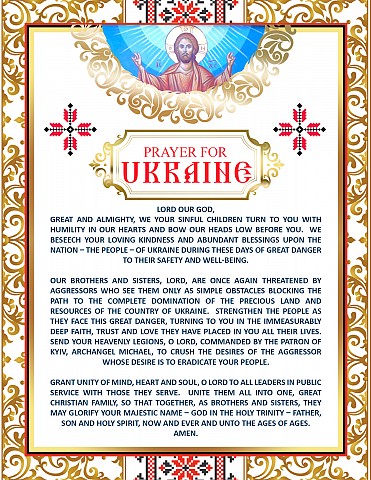
Help and Pray for Ukraine
14 October 2021
Real Cancel Culture
Cancel culture is real and both the left and right are guilty of using it against their perceived enemies. Sometimes it can be used to shutdown a harmful practice, but often times it can also be harmful to the innocent. In my lifetime I remember BADD (Bothered About Dungeons & Dragons) trying to shut down D&D (Dungeons & Dragons) in the 1980's due to the Satanic Panic, which has been proven to be a false and unnecessary panic. My Dungeon Master's (referee's) parents bought into it and did not allow their son to play D&D anymore at his house. Instead we had to play a Christian RPG (Role-Playing Game) called Dragon Raid at his house. We still played Dungeons & Dragons at my house, because my parents did not buy into the panic. You can read more about the fraudulent Satanic Panic and attempts to cancel D&D at https://www.bbc.com/news/magazine-26328105
Recently a priest's blog was removed from Ancient Faith Radio after multiple warnings about not posting about partisan politics. This was not a case of internet opinion charging him before he was in a court of law, but a company that warned a content provider to stop a prohibited activity over and over until they felt they had to remove him. People cried "Cancel Culture" but this is NOT cancel culture. He was removed from one platform, no judgement was made upon him as a bad person, and AFR even offered to help him set up his blog at new platform. AFR only made a statement about it because the priest had made one first, claiming he was cancelled (Which he has now, thankfully retracted). I am not even a fan of AFR, but these are facts, which I will not twist because I like and respect the priest in question.
However in the modern day, there are actual victims of cancel culture in the world. The problem is that this is done off of accusations, not someone being found guilty in a court of law. In fact, one of these cancelled creators, Zak Smith, actually ended up suing his accusers and was found that he was being defamed and that the accusers had to pay-up and/or post retractions to their accusations. But those facts were not important to the Twitter troll mobs who keep spreading the accusations (only made on social media) and as such, no one will publish Zak's work. Zak, thankfully, makes lots of money from his art, but the TTRPG is missing out by not having his Adventure Campaigns which are also works of art. There are others that are also being cancelled and it is hurting their ability to make a living for them and their family. To this end, I recently interviewed Zak, being a fan or his art and writing and wanting to get the facts of his story from his POV without the interviewer (me) passing judgement. WARNING: This interview has adult language and talks about adult situations.
01 July 2021
After Almost 20 Years, I Finally Found Book 4 of "The Monastery Builders" Series
For almost 20 years I had been looking for book 4 in The Monastery Builders series, and yesterday, I finally go it! Let me tell you, it was well worth the wait. This is an incredible hagiographical series that I recommend for all Orthodox Christians. They were all published and printed with the blessing of His Grace, ALYPY, Bishop of Chicago, Detroit, and Middle America of the Russian Orthodox Church Outside of Russia (ROCOR).
Here are links to all five books of The Monastery Builders series. Unfortunately, since it has long been out of print, they are not all available at good prices or even available at all.
- The Lives of the Monastery Builders [This brown book was published in 1988]
- The Lives of the Monastery Builders of Soumela [This green book was published in 1991]
- The Lives of the Monastery Builders of Meteora [This blue book was published in 1991]
- The Lives of the Monastery Builders of The Great Cave (Mega Spelaion) [This purple book was published in 1992]
- The Lives of the Monastery Builders of The Holy Mountain Athos [This black book was published in 1992]
25 June 2021
Rejoice! Book 5 of The Philokalia has Finally Been Published in the English Language!
The Philokalia is a collection of texts written between the fourth and the fifteenth centuries by spiritual Elders and Saints of Orthodox Christianity First published as a compiled manuscript in Greek in 1782, The Philokalia has exercised an influence in the recent history of the Orthodox Church far greater than that of any book apart from the Bible. It is concerned with themes of universal importance: how one may develop their inner powers and awake from illusion; how they may overcome fragmentation and achieve spiritual wholeness; how they may attain the life of contemplative stillness and union with God.
For many years, Orthodox Christians have been awaiting the English translation of the 5th and final book of the Philokalia, the first 4 books having long been translated by Bp. Kallistos Ware and Mother Maria. However, the fifth book of the Philokalia has been translated and published by Anna Skoubourdis and Saint George Monastery in 2021, in both hardcover and paperback, just like the other four volumes published in the late 1970's and early 1980's. Here are the links to all five volumes that are now available:
- The Philokalia: Volumes I, II, III, & IV in 4 paperback books
- The Philokalia: Volume I in hardcover
- The Philokalia: Volume II in hardcover
- The Philokalia: Volume III in hardcover
- The Philokalia: Volume IV in hardcover
- The Philokalia: Volume V in paperback
- The Philokalia: Volume V in hardcover
24 June 2021
The Teachings of the Holy Orthodox Church has Finally Been Completed!
Back in 1986, The Reverend Father Michael Azkoul, Ph.D. wrote The Teachings of the Holy Orthodox Church: Volume 1: God, Creation, Old Israel, Christ in 236 pages, which was edited by Hieromonk Gregory of Dormition Skete with the blessing of His Grace, ROCOR (Russian Orthodox Church Outside Russia) Bishop Alypy of Cleveland. Save for its attacks on Blessed Augustine of Hippo, the author of The City of God, it is a good book that does a really good job of explaining the typology of the Old Testament revealed in the New Testament's Holy Gospels, Acts, Epistles, and Revelation, and I hoped to see Volume 2: The Church and Volume 3: Mystagogy of The Teachings of the Holy Orthodox Church in the future. Volume 1's five chapters are:
- Introduction
- God: The Holy Trinity
- The Creation
- The Economy of Old Israel
- Jesus the Christ
- The One Church
- Christ and the Church: The Heterodox
- The Church of God
- Mystagogy I: Holy Baptism
- Mystagogy II: The Eucharist
- Mystagogy III: The Other Mysteries
- The All-Holy and Ever-Virgin Mary, The Mother of God, with All the Saints
- The End of the Age
- Augustine of Hippo
23 June 2021
Which Orthodox Christian Prayer Book do you use?
Not too long ago, there were not many choices for an English Prayer Book for Orthodox Christians. But today there are 4 strong prayer books for Orthodox Christians who prefer to use English to pray. There are actually many Orthodox Christian prayer books today, but I can only strongly recommend these four:
I.) The (ROCOR - Russian Orthodox Church Outside Russia) Holy Trinity Monastery "Jordanville" Prayer Book in hardcover for $18.69, first published in English in 1960 and revised constantly, is considered the Russian style gold standard. When verses from Holy Scripture are used, they previously used the King James Version and now use A Psalter for Prayer which is a new blend of the KJV and the Cloverdale Edition of the Psalter. It has evening prayers before sleep rather than the service of the compline.
II.) The (OCA - Orthodox Church in America) Saint Tikhon Monastery Press' Orthodox Christian Prayers in imitation leather for $24.95, published in 2019 as spiritual successor to many other lesser-quality OCA prayer books of the past. This newest version improves everything from all the previous OCA versions of the prayer book, and had excellent formatting that means most prayers start at the the beginning of a new page, rather than somewhere in the middle or bottom of the page. It means they made interesting decisions on font sizes to make this work, but in the end, a job well done. When verses from Holy Scriptures are used, they use A Psalter for Prayer. rather than the Psalter of the Orthodox Study Bible like some previous OCA prayer books had. It has both the compline and prayers before sleep as it is made for Orthodox Christians of any jurisdiction. It also has 3 bookmarks sewn into the spine!
III.) The (HOCNA - Holy Orthodox Church in North America) Holy Transfiguration Monastery's Prayer Book for Orthodox Christians in hardcover for $24.99 first published in 1987, it is very similar to the ROCOR Prayer Book, but made for members of Greek parishes. When verses from Holy Scripture are used, they use The Psalter: According to the Seventy. It has the compline rather than evening prayers before sleep.
IV.) The (GOA - Greek Orthodox Archdiocese of America) Newrome Press' Orthodox Christian Prayer Book in hardcover for $29.99, published in 2016 is the first GOA prayer book to be considered as a good enough book to replace the earlier HTM prayer book. Newrome Press makes beautiful books inside and out. When verses from Holy Scripture are used, they use the Eastern / Greek Orthodox Bible. It has the compline rather than evening prayers before sleep. It also has 2 bookmarks sewn into the spine!
20 June 2021
The Orthodox Psalter has been Updated and Expanded! ⭐⭐⭐⭐⭐
As you know, back in 2011 I highly recommended "The Orthodox Psalter" by Holy Apostles Convent in this blog post/article and continued to point out the superiority of the translation in another blog post/article the same year. I still stand by that recommendation, but recently I found that there is a new 3rd edition of this Psalterion published in 2017.
There are 9 more pages of patristics than the 1st edition, which includes explanations of verses and psalms from the Church Fathers from both the east and the west. The Orthodox Psalter includes both the Septuagint and KJV numbering systems, 20 Kathismas, 9 Biblical Odes, 160 pages of Patristic Commentary, 6 Tables for Usage, 2 General Listings, The Verses and Couplet to the Prophet David, and the excellent introduction, "In Praise of the Psalms" by Saint Basil the Great. All in a full-sized 6.25" x 9.25" sturdy Deep Purple Smyth-sewn case-bound book, with gold stamping, and a burgundy double-sided grosgrain ribbon marker. As an author I appreciate that it is printed on high-opacity acid-free 80-pound cream coloured pages, in a very easy-to-read 14-point bold typeface for the Psalms, and a readable and clear 10-point typeface for the Commentary.
Aesthetically, the "Deep Purple" that I think of more as an indigo, looks great with the green "The Holy Prophets", the dark navy "The Orthodox New Testament Volume One", and the dark burgundy "The Orthodox New Testament Volume Two". These books are must-haves for any Orthodox Christian.
The Orthodox Psalter and the other mentioned books are available at Amazon or can be ordered directly from the Convent.
14 May 2021
Politicians aren't Saviours and Political Parties are NOT the Church!
While I have blogged about government before such as in the post titled, "What the Bible says about those who govern us?", there are some essential verses of the Bible that it seems some politically-motivated Christians seem to forget in both the United States of America and other countries. Here is a verse that many seem to be forgetting as of the last decade or so. Here is a quick reminder.
Psalm 145(146):2 Do not have trust in rulers, in sons of men, in whom there is no salvation.Verses from The Orthodox Psalter: The Psalterion of The Prophet and King David, According to the Seventy, With the Nine Odes, And Patristic Commentary.
02 February 2021
My 2nd Novel, "Vhaidra & the DRAGON of Temple Mount" is NOW Available!
Many of you know that besides blogging here at the Orthodox Scouter, I am also top-selling author of epic fantasy fiction novels. My first novel, Vhaidra & the DESTINY of Nikodemos was a top-seller at Barnes & Noble, was a HPB Pick at Half-Price Books, and sold well at Amazon and more than 50 bookstores across the USA and in more than 20 countries.
Today, I wanted to share that yesterday I released my second novel in THE VHAIDRA SAGA, a sequel to Vhaidra and the DESTINY of Nikodemos that is titled, Vhaidra and the DRAGON of Temple Mount. This novel takes the characters through many years of peace followed by the beginning of some very big troubles. Here is the back cover blurb for it.
The War of the Dragons begins here...
What secrets lie in Sicyon's mysterious Temple Mount? Who are ATHIE, DAMIANOS, and KOSMAS, and what is their connection to the orphaned half-dragon MIKHAIL? Are the forces that are purportedly working for a better tomorrow in Sicyon truly what they say they are?
After the devastating Battle of Sicyon in “Vhaidra & the DESTINY of Nikodemos,” House Iroas ascends as VHAIDRA the dark elf monk and NIKODEMOS the human cleric raise a powerful house of half-drow warriors in the overworld. Meanwhile, the young half-dragon, MIKHAIL, his human milkmaid and astonishing ranger, MIRIAM, and the flirtatious dwelf dancer, TI'ERRA, change the ascetic half-orc wizard, ELDER DIONYSIOS, forever, as his hidden history intersects with his future, whether he likes it or not.
The obsidian half-dragon grows from a baby to Sicyon’s powerful stylite and protector, but will his abilities be enough to stave off both the imminent threat of the mighty white dragon from the north or will Sicyon get a long cold winter that it can never wake from? Will the diabolical forces within Sicyon that conspire against ARCHON JUSTINIAN and his allies be able to exploit VHAIDRA, NIKODEMOS, TI'ERRA, ELDER DIONYSIOS, MIRIAM, and MIKHAIL to create the civil war that they so desire? Find out the answers to these questions and more in the exciting adventures of Vhaidra & the DRAGON of Temple Mount!
It is currently available for purchase at Amazon, Barnes & Noble, and eBay, and will be in many more bookstores very soon. It is already getting 5-star reviews, and like my previous novels it has been enjoyed by people of all ages and people who never had read fantasy novels before.
07 October 2020
The National EOCS Virtual Religious Retreat is this Saturday!
Please go to https://www.eocs.org/2020-religious-retreat-registration to sign up for this first virtual national retreat for the Eastern Orthodox Committee on Scouting!
Preliminary Schedule (times are EDT)
1:00 pm - Opening Remarks and Prayer
1:10 pm - Presentations from churches with Scouts chartered to them:
- St. Demetrios, Astoria, NY & St. John the Theologian, Tenafly,NJ
1:30 pm - Breakout sessions on North American Eastern Orthodox Saints Peter the Aleut & Olga Michael. Ambassadors from Holy Cross presenting to Scouts separated into Grade levels K-3, 4-5, 6-8, 9-12
2:00 pm - Presentations from churches with Scouts chartered to them:
- St. Nicholas, Flushing, NY,
- Holy Cross, Brooklyn, NY
- St. John the Baptist, Euless, TX
2:25 pm - Breakout Sessions on North American Eastern Orthodox saints
- Saint John Maximovitch
- Saint Nikolaj Velimirovic
Ambassadors from Holy Cross presenting
- Separated into Grade levels K-3, 4-5, 6-8, 9-12
2:55 pm – Presentations from churches with Scouts chartered to them.
- St. Demetrios, Camarilo, CA
3:05 pm - Scouting Religious Awards recognitions(only for those present)
- Scout & Ambassador Talent Show
- Closing Remarks and Prayers
- Vespers
15 August 2020
My Novel, "Vhaidra & the DESTINY of Nikodemos", is Available Internationally in Both eBook and Paperback Versions NOW!
My novel, Vhaidra & the DESTINY of Nikodemos, is now available as an eBook, for those of you who prefer electronic versions of books rather than the paper and print versions.
Currently at Amazon it is ranked #3 in Romantic Action & Adventure and #15 in Fantasy Action & Adventure for new releases (released in the last 90 days) as of today! At Barnes & Noble it is ranked #1 in English Drama, #4 in Fantasy Drama English Literature, and #22 in Epic Fantasy in new releases (released in the last 30 days)! Thank you to all of you helped my novel get such great numbers! I am super happy to be listed amongst the top books in these genres, (Othello, Richard III, Harry Potter, etc.)
I'm asking everyone to take a photo of them with my book or reading it for my readers collage, and to give the book a 5 star review if they can. If you cannot for any reason, please reach out to me with your feedback, as feedback is a gift! Here are some of the people who have already sent me photos of them with my novel.
If you would like to know where you can purchase my book, here are the links where it is currently available:
01 August 2020
On a Personal Note: My Novel, "Vhaidra & the DESTINY of Nikodemos" was released today!
- Yesterday, I, along with 110 others were laid-off by the Boy Scouts of America, a reduction that I am told was about 40% of its staff.
- Today, my side-gig became my only gig, as my first novel was published.
- USA: https://amzn.to/3fTpTNG
- UK: https://amzn.to/30EXZia
- GERMANY: https://amzn.to/2CGDPfF
- FRANCE: https://amzn.to/3eZ52XT
- SPAIN: https://amzn.to/30E9oP7
- ITALY: https://amzn.to/3hsAdN5
- JAPAN: https://amzn.to/3fZW8Le
- CANADA: https://amzn.to/3hrYpiA
- AUSTRALIA: https://amzn.to/2OPZsN5
- INDIA: https://www.amazon.in/dp/1734914009/
01 April 2020
Every Sunday is Pascha
19 March 2020
A Prayer in Time of Pestilence and Pandemics
Let us pray to the Lord. Lord have mercy.
Heavenly Lord and Creator of all things, have mercy on us your people, for we have strayed from the path which You have given us.
Forgive our many offenses and grant us your mercies.
We come to you today with tears of repentance and ask for your protection from the terrible disease that threatens us.
We have sinned, Oh Lord, and we have disobeyed your Commandments, but we beseech your mercy and compassion; have mercy on your servants, on the elderly and the children; have mercy on us all, and keep away from the terrible diseases and viruses which appeared in our days.
Send your holy angels, Oh Lord, to disperse every disease and calamity and keep us safe and healthy that we may worship and glorify your Most Holy Name of the Father and of the Son and the Holy Spirit, through the intercessions of the Holy Theotokos and of all your Saints.
Amen.
09 March 2020
The BEST Lean Six Sigma Books on the Market for Those Interested in Continuous Process Improvement and Change Management
Here I have categorized them into sections based on topics or philosophies and broken them into groups of books that I feel are best read together.
03 March 2020
The 5 Types of Love in Ancient Greek
Agápe (ἀγάπη agápē) means "love: especially charity; the love of God for man and of man for a good God." Agape is used in ancient texts to denote feelings for one's children and the feelings for a spouse, and it was also used to refer to a love feast. Agape is used by Christians to express the unconditional love of God for his children.
Éros (ἔρως érōs) means "love, mostly of the sexual passion." The Modern Greek word "erotas" means "intimate love". Plato refined his own definition: Although eros is initially felt for a person, with contemplation it becomes an appreciation of the beauty within that person, or even becomes appreciation of beauty itself. Plato does not talk of physical attraction as a necessary part of love, hence the use of the word platonic to mean, "without physical attraction". In the Symposium, the most famous ancient work on the subject, Plato has Socrates argue that eros helps the soul recall knowledge of beauty, and contributes to an understanding of spiritual truth, the ideal "Form" of youthful beauty that leads us humans to feel erotic desire – thus suggesting that even that sensually based love aspires to the non-corporeal, spiritual plane of existence; that is, finding its truth, just like finding any truth, leads to transcendence. Lovers and philosophers are all inspired to seek truth through the means of eros.
Philia (φιλία philía) means "affectionate regard, friendship", usually "between equals". It is a dispassionate virtuous love, a concept developed by Aristotle. In his best-known work on ethics, Nicomachean Ethics, philia is expressed variously as loyalty to friends (specifically, "brotherly love"), family, and community, and requires virtue, equality, and familiarity. Furthermore, in the same text philos is also the root of philautia denoting self-love and arising from it, a general type of love, used for love between family, between friends, a desire or enjoyment of an activity, as well as between lovers.
Storge (στοργή storgē) means "love, affection" and "especially of parents and children". It is the common or natural empathy, like that felt by parents for offspring. Rarely used in ancient works, and then almost exclusively as a descriptor of relationships within the family. It is also known to express mere acceptance or putting up with situations, as in "loving" the tyrant. This is also used when referencing the love for one's country or a favorite sports team.
Xenia (Greek: ξενία, romanized: xenía, meaning "guest-friendship") is the ancient Greek concept of hospitality, the generosity and courtesy shown to those who are far from home and/or associates of the person bestowing guest-friendship. The rituals of hospitality created and expressed a reciprocal relationship between guest and host expressed in both material benefits (such as the giving of gifts to each party) as well as non-material ones (such as protection, shelter, favors, or certain normative rights).
02 February 2020
Scout Sunday 2020/7528
Please see the following important announcement from the Assembly of Canonical Orthodox Bishops of the United States of America about Scout Sunday for 2020 / 7528:
08 November 2019
A Great Scout Backpack
03 November 2019
Saint Constantine, Patron Saint of BSA Camp Constantin
He was born at Naissus, today's city of Niš in Upper Moesia (modern Serbia and Montenegro), to Constantius I Chlorus and an innkeeper's daughter, Helen. Constantine was well educated and served at the court of Diocletian in Nicomedia as a kind of hostage after the appointment of his father Constantius, a general, as one of the two Caesars (at that time a junior emperor), in the Tetrarchy in 293. In 305, the Augustus, Maximian, abdicated, and Constantius succeeded to the position. However, he died in 306. Constantine managed to be at his deathbed in Eboracum (York, England), where troops loyal to his father's memory proclaimed him Emperor. For the next 18 years, he fought a series of battles and wars that left him first as emperor of the west, and then as supreme ruler of the Roman Empire.
Constantine is perhaps best known for being the first Roman Emperor to endorse Christianity, traditionally presented as a result of an omen — a chi-rho in the sky, with the inscription "By this sign shalt thou conquer" — before his victory in the Battle of Milvian Bridge in 312, when Constantine is said to have instituted the new standard to be carried into battle, called the labarum.
Christian historians ever since Lactantius have adhered to the view that Constantine "adopted" Christianity as a kind of replacement for the official Roman paganism. Even Christian skeptics have accepted this formulation, though seeing Constantine's policy as a political rather than spiritual move.
By the end of the 3rd century, Christian communities and their bishops had become a force to contend with, in urban centers especially. Christians were preferred for high government positions; the Church was granted various special privileges; and churches like the Church of the Nativity in Bethlehem and the Church of the Holy Sepulchre in Jerusalem were constructed. Christian bishops took aggressive public stances that were unknown among other cult leaders, even among the Jews. Proselytism had had to be publicly outlawed, simply to maintain public decorum. In the essential legions, however, Christianity was despised as womanish, and the soldiers followed pagan cults of Mithras and Isis. Since the Roman Emperors ruled by "divine right" and stayed in power through the support of the legions, it was important for them to be seen to support a strong state religion. The contumely of the Christians consisted in their public refusal to participate in official rites that no one deeply believed in, but which were an equivalent of an oath of allegiance. Refusal might easily bring upon all the Roman people the loss of the gods' support; such were the usual justifications for occasional lynchings of Christians by Roman soldiers, the fare of many martyrologies.
Constantine and Licinius' Edict of Milan (313) neither made paganism illegal nor made Christianity a state-sponsored religion. What it did was legalize Christianity, return confiscated Church property, and establish Sunday as a day of worship. Though the church prospered under Constantine's patronage, it also fell into the first of many public schisms. He called the First Ecumenical Council to settle the problem of Arianism, a dispute about the personhood and Godhood of Jesus Christ. It produced the Nicene Creed, which favored the position of Athanasius, Arius's opponent, and became official doctrine.
When the Altar of Victory was desecrated and removed from its place of honor in the Senate, the Senate deputized Symmachus to appeal to the emperor for its return. Symmachus publicly characterized the late Emperor Constantine's policy, in a plea for freedom of religion:
He diminished none of the privileges of the sacred virgins, he filled the priestly offices with nobles, he did not refuse the cost of the Roman ceremonies, and following the rejoicing Senate through all the streets of the eternal city, he contentedly beheld the shrines with unmoved countenance, he read the names of the gods inscribed on the pediments, he enquired about the origin of the temples, and expressed admiration for their builders. Although he himself followed another religion, he maintained its own for the empire, for everyone has his own customs, everyone his own rites. The divine mind has distributed different guardians and different cults to different cities. As souls are separately given to infants as they are born, so to peoples the genius of their destiny.
His victory in 312 AD over Maxentius at the Battle of Milvian Bridge resulted in his becoming Western Augustus, or ruler of the entire western half of the empire. He gradually consolidated his military superiority over his rivals in the crumbling Tetrarchy until 324, when he defeated the eastern ruler, Licinius, and became sole emperor.
Constantine rebuilt the ancient Greek city of Byzantium, naming it Nea Roma (New Rome), providing it with a Senate and civic offices similar to the older Rome. After his death it was renamed Constantinople, and gradually became the capital of the empire.
He was succeeded by his three sons, Constantine II, Constantius II and Constans, who secured their hold on the empire with the murder of a number of relatives and supporters of Constantine. The last member of his dynasty was his grandson, Julian the Apostate, who attempted to restore paganism.
Troparion (Tone 8)
Having seen the figure of the Cross in the heavens,
And like Paul not having received his call from men, O Lord,
Your apostle among rulers, the Emperor Constantine,
Has been set by Your hand as ruler over the Imperial City
That he preserved in peace for many years,
Through the prayers of the Theotokos, O only lover of mankind.
Kontakion (Tone 3)
Today Constantine and his mother Helen
Reveal the precious Cross,
The weapon of the faithful against their enemies.
For our sakes, it has been shown to be a great sign, and fearsome in battle.
About Camp Constantin
Camp Constantin is the flagship campground for Circle Ten. Located on 385 acres (1.6 km2) on the shores of Possum Kingdom Lake near Graford, Texas and containing 15 campsites, Constantin acts as both a regular camp open to Scouts from all areas and as Circle 10's largest and longest-running summer camp hosting roughly 2,800 Scouts during the 6 weeks it's open during the summer.
Camp Constantin was acquired by the Boy Scouts in 1946 when Eugene Constantin donated it, after the death of his son in World War II, to the group that he decided best served the needs, morals, and values of young men. The camp recently celebrated its 60th birthday and regularly plays host to International Scouts, most notably Scouting Ireland.
Within Camp Constantin is a sea Aquatics Base that was established by a generous donation from Circle Ten board member and former Constantin epitome staff member Jack D. Furst. The Aquatics area is the best maintained and most used Aquatics area within Circle Ten Council and one of the best in Texas. The Aquatics Base features a fleet of sailboats (consisting mainly of Sunfish and Hobie Cats), dozens of newly donated canoes, 5 ski boats, a two-year-old state-of-the-art swim dock, and a boat dock. Another popular feature are the "Blob" set out every summer. Because of Fursts' generosity and the area upkeep by epitome staff members it is able to offer the Swimming, Rowing & Canoeing, Motorboating, Lifesaving, Kayaking, Sailing & Advanced Sailing, and Water Skiing merit badges as well as Lifeguard training. Its Water Odyssey program is unique to the camp and is designed solely for Eagle Scouts, Venturers, and Sea Scouts.
24 August 2019
Saint Edward the Martyr-King, Patron Saint of Commissioners
Now King Edgar had been anointed twice on the model of King David: first in 960 or 961, when he became King of England, and again in 973, when his dominion expanded to the north and west and he became "Emperor of Britain", receiving the tribute of eight sub-kings of the Celts and Vikings.
But between these two anointings he had married again and fathered a second son, Ethelred. When King Edgar died in 975 (his relics were discovered to be incorrupt in 1052), Ethelred's partisans, especially his mother, argued that Ethelred should be made king in preference to his elder half-brother Edward, on the grounds that Edgar had not been anointed when he begat Edward in 959 or 960, and that his first wife, Edward's mother, had never been anointed, so that the throne should pass to the younger son, Ethelred, who had been born "in the purple" when both his parents were anointed sovereigns.
The conflict was settled when the archbishop of Canterbury, St. Dunstan, seized the initiative and anointed St. Edward. However, the defeated party of Ethelred did not give up their opposition to God's chosen one.
St. Edward, according to an early source, "was a young man of great devotion and excellent conduct. He was completely Orthodox, good and of holy life. Moreover, he loved above all things God and the Church. He was generous to the poor, a haven to the good, a champion of the Faith of Christ, a vessel full of every virtuous grace."
However, many troubles met the young king on his accession to the kingdom. A great famine was raging through the land, and, beginning in the West and spreading to the East, a violent attack was stirred up against the holy monasteries by a prominent nobleman named Elfhere. Many of the monasteries which King Edgar had established were destroyed, and the monks were forced to flee.
Thus according to a contemporary monastic writer: "The whole kingdom was thrown into confusion, the bishops were agitated, the noblemen stirred up, the monks shaken with fear, the people terrified. The married clergy were glad, for their time had come. Abbots, with their monks, were expelled, and married clergy, with their wives, were introduced [in their place]."
The root of the trouble was that in the previous reign the white clergy [married clergy] had been expelled from the monasteries in which they had been living unlawfully, had been replaced by real monks, and were now seeking to be re-established in their former place. Also, the nobles coveted the lands which King Edgar had given to the monasteries. Already in the previous reign there had been a council to discuss this question, and when it was suggested that the white clergy be restored to their place, a voice was heard from a cross on the wall: "Far be it from you! You have done well: to change again would be wrong."
Icon by the hand of Mother Justina, Convent of St. Elizabeth, Etna, California, showing the authentic form of early English crown (square). - ikon and description taken from http://www.odox.net/Icons-Edward.htm In spite of this, the pressure continued and erupted into violence at the beginning of the reign of King Edward. However, King Edward and Archbishop Dunstan stood firm in a series of stormy councils attended by all the leading men of Church and State. Thus at one council, which took place at Kirtlington, Oxfordshire, after Pascha, 977, the tension was so great that the king's tutor, a bishop, died suddenly during the proceedings.
Then, at another council in Calne, Wiltshire, when the white clergy were renewing their complaints, St. Dunstan said: "Since in my old age you exert yourselves to the stirring up of old quarrels, I confess that I refuse to give in, but commit the cause of His Church to Christ the Judge." As he spoke the house was suddenly shaken; the floor of the upper room in which they were assembled collapsed, and the enemies of the Church were thrown to the ground and crushed by the falling timber. Only the beam on which the archbishop was sitting on did not move.
In all this turmoil King Edward stood firm together with the archbishop in defense of the Church and the monasteries. For this reason some of the nobles decided to remove him and replace him with his weaker younger brother. They seized their opportunity on March 18, 979.
On that day the king was out hunting with dogs and horsemen near Wareham in Dorset. Turning away from this pursuit, the king decided to visit his young brother Ethelred, who was being brought up in the house of his mother at Corfe Castle, near Wareham. He took a small retinue with him, but suddenly, as if playing a joke on him, his retinue broke up and went off in all directions, leaving him to continue on his way alone.
When Ethelred's mother, Queen Etheldritha, heard from her servants that the young king was approaching, she hid the evil design in her heart and went out to meet him in an open and friendly manner, inviting him into her house. But he declined, saying that he only wished to see his brother and talk to him. The queen then suggested that while he was waiting he should have a drink. The king accepted. At that moment one of the queen's party went up to the king and gave him a kiss like Judas. For then, just as the king was lifting the cup to his lips, the man who had kissed him leapt at him from the front and plunged a knife in his body. The king slipped from the saddle of his horse and was dragged with one foot in the stirrup until he fell lifeless into a stream at the base of the hill on which Corfe Castle stands.
The queen then ordered that the holy body be seized and hidden in a hut nearby. In obedience to her command, the servants took the body by the feet and threw it ignominiously into the hut, concealing it with some mean coverings.
Now there lived in that hut a woman blind from birth whom the queen used to support out of charity. While she spent the night there alone with the holy body, suddenly, in the middle of the night, a wonderful light appeared and filled the whole hut. Struck with awe, the poor woman cried out: "Lord, have mercy!" At this, she suddenly received her sight, which she had so long desired. And then, removing the covering, she discovered the dead body of the holy king. The present church of St. Edward at Corfe stands on the site of this miracle.
The stream into which the holy king's body first fell was found to have healing properties. Many pilgrims who washed their eyes in the water recovered or improved their sight. These include two reported cases in modern times.
At dawn the next day, when the queen learned of the miracle, she was troubled and decided to conceal the body in a different way. She ordered her servants to take it up and bury it in a marshy place. At the same time she commanded that no one should grieve over the king's death, or even speak about it. Then she retired to a manor in her possession called Bere, about ten miles from Corfe.
Meanwhile, such grief took hold of Ethelred over his brother's death that he could not stop weeping. This angered his mother, who took some candles and beat him with them viciously, hoping thereby to stem the flow of his tears. It is said that thereafter Ethelred so hated candles that he would never allow them to be lit in his presence.
When St. Dunstan, archbishop of Canterbury, heard the news he was greatly saddened by the death of his beloved spiritual son, and at the coronation of his half-brother, Ethelred, at Kingston he prophesied great sorrow for the English people in the coming reign.
The prophecy was exactly fulfilled after Dunstan's death in 988, when the pagan Danes invaded England and eventually, in 1016, after over twenty years of bloody war, conquered the country.
The contemporary Anglo-Saxon Chronicle expressed the universal horror felt by the English Orthodox people at this time:
"No worse deed for the English was ever done than this, since first they came to the land of Britain. Men murdered him, but God exalted him; in life he was an earthly king, but after death he is now a heavenly saint. His earthly kinsmen would not avenge him, yet his Heavenly Father has amply avenged him. Those earthly slayers would have destroyed his memory upon earth; but the Heavenly Avenger has spread his fame abroad, in the heavens and upon the earth. Those who before would not bow in reverence to his living body, now humbly bend the knee to his dead bones. Now can we perceive that the wisdom of men, their deliberations and their plots, are as nothing against God's purpose."
Almost a year passed, and it pleased Almighty God to make known the heavenly glory of the martyr-king. A pillar of fire was seen over the place where his body was hidden, lighting up the whole area. This was seen by some devout inhabitants of Wareham, who met together and raised the body from the place where it lay. Immediately a sweet, clear spring of healing water sprang up in that place. Then, accompanied by a huge crowd of mourners, the body was taken to the church of the Most Holy Mother of God in Wareham and buried at the east end of the church. This first translation of the holy relics took place on February 13, 980.
Meanwhile, the queen's deceit and treachery were made known throughout the country, the fame of the innocent martyr-king increased, and many signs and miracles testified to his holiness. The nobleman Elfhere, deeply repenting of his destruction of monasteries and opposition to the king, decided to have the body translated to a worthier resting place. Bishops and abbots were invited, together with Abbess Wulfrida of Wilton and the nuns of Wilton monastery, who included St. Edith, the king-martyr's half-sister. A great number of laymen and women of Dorset also converged on Wareham.
Then the holy body was disinterred in the presence of the whole people and was found to be completely incorrupt. Seeing this, St. Dunstan and the other bishops led the people in hymns of praise to God, while St. Edith ran up to her brother's body and embraced it with tears of joy and sorrow combined.
Then the body was lifted onto a bier and with a great procession of clergy and laity was taken to Shaftesbury, to the women's monastery founded in the ninth century by St. Edward's ancestor, King Alfred the Great, in honor of the Most Holy Mother of God. The procession began on February 13, 981 and arrived at Shaftesbury seven days later, on February 20. There the holy body was received with honor by the nuns and was buried with great ceremony on the north side of the altar.
On the way from Wareham to Shaftesbury, two poor men who were so bent over and paralyzed that they could hardly crawl on their hands and knees were brought close to the bier. Those carrying it then lowered the sacred body down to their level, and immediately in the sight of all they were restored to full health. A great shout rose to the heavens, and all together glorified the holy martyr.
On hearing of the miracles worked through the saint, Queen Etheldritha was overcome by remorse and decided to go to him to ask forgiveness. But as she was riding to Shaftesbury with her servants, her horse suddenly stopped and refused to go further, nor would he be moved by blows of the whip and threats.
Then the queen realized that she was held back by the force of her sins. Jumping off the horse, she prepared to continue her journey on foot. But again she was hurled back and could make no progress. Later, weeping bitterly over her sins, the queen retired to a convent at Wherwell, where "for many years she clothed her pampered body in hair-cloth, sleeping at night on the ground without a pillow, and mortifying her flesh with every kind of penance".
During the twenty years after the translation of the relics of St. Edward to Shaftesbury, many miracles were worked through the intercession of the holy martyr-king.
Thus there was a woman living in a remote part of England, who had an infirmity of her legs and daily poured forth prayers for her health. One night St. Edward appeared to her in a dream and said: "When you rise at dawn, go without delay to the place where I am buried, for there you will receive new shoes that are necessary for your infirmity."
Waking early, the woman reported the dream to her neighbor; but she, disbelieving the vision, declared that it was imagination. And so the woman disobeyed the command of the saint. But he, appearing to her a second time, said: "Why do you spurn my command and so greatly neglect your health? Go then to my tomb and there you will be delivered." She recovered her strength and said: "Who are you, lord? Where shall I find your tomb?" He replied: "I am King Edward, recently killed by an unjust death and buried at Shaftesbury, in the church of Mary, the blessed Mother of God." The woman woke early, and thinking over what she had seen, took was needed for her journey and made her way to the monastery. There she prayed for some time with humble heart to God and St. Edward, and was restored to health.
Great miracles continued to be worked at the tomb of the royal martyr, and in 1001 his brother Ethelred, who had succeeded him on the throne, granted the town of Bradford-on-Avon "to Christ and His saint, my brother Edward, whom, covered in his own blood, the Lord Himself has deigned to magnify by many signs of power."
At about the same time the tomb in which the saint lay began to rise from the ground, indicating that he wished his remains to be raised from the earth.
In confirmation of this he appeared in a vision to a monk and said: "Go to the convent called by the famous name of Shaftesbury and take commands to the nun Ethelfreda who is in charge of the other servants of God there. You will say to her that I do not wish to remain any longer in the place where I now lie, and command her on my behalf to report this to my brother without delay."
Rising early, and perceiving that the vision he had seen was from God, the monk quickly made his way to the abbess as he had been commanded and told her in order all that had been revealed to him. Then the abbess, giving thanks to God, immediately told the whole story to King Ethelred, at the same time making known to him the elevation of the tomb. The king was filled with joy and would have been present at the elevation if he had been able. But, being prevented by the invasions of the Danes, he sent messengers to the holy bishops Wulsin of Sherborne and Elfsin of Dorchester-on-Thames, as well as to other men of respected life, instructing them to raise his brother's tomb from the ground and replace it in a fitting place.
Following the king's command, those men joyfully assembled at the monastery with a vast crowd of laymen and women. The tomb was opened with the utmost reverence, and such a wonderful fragrance issued from it that all present thought that they were standing amidst the delights of Paradise. Then the holy bishops drew near, bore away the sacred relics from the tomb, and, placing them in a casket carefully prepared for this, carried it in procession to the holy place of the Saints together with other holy relics. This elevation of the relics of St. Edward took place on June 20, 1001.
St. Edward was officially glorified by an act of the All-English Council of 1008, presided over by St. Alphege, archbishop of Canterbury (who was martyred by the Danes in 1012).
King Ethelred ordered that the saint's three feast days (March 18, February 13 and June 20) should be celebrated throughout England. The church in which St. Edward's relics rested was rededicated to the Mother of God and St. Edward, and that part of the town was renamed "Edwardstowe" in honor of the saint. The town kept this name throughout the Middle Ages: only after the Protestant Reformation was the original name of Shaftesbury restored.
Many miracles continued to be worked at the tomb of St. Edward. Thus during the reign of his nephew, King Edward the Confessor (1042- 1066), a man named John living in north-west France, whose whole body had been so bent by severe pain that his heels were touching his loins and he was unable to stand upright, was told in a vision at night to go to England to the monastery at Shaftesbury, where St. Edward lay, as there he would recover his health. He told this vision to his neighbors and relatives, and with their help and advice he crossed the English Channel and after many detours at last reached the monastery. Having prayed there for some time to God and St. Edward he recovered his health, and remained as a servant at the monastery for the rest of his life.
Not long after, a leper came to the tomb of the saint, and after invoking God's help by prayers and vigils, he received complete cleansing from his infirmity.
Another man who had been bound in heavy chains for his sins was suddenly freed from them as he was praying earnestly at the tomb.
Again, Bishop Herman of Salisbury was staying at the monastery, and a poor blind man whom he supported was with him. While the bishop was delayed, the blind man decided to go and pray at the tomb, led by a boy who guided his steps. He continued praying until evening, when the wardens who were looking after the church asked him to leave. He refused, and said that he would wait on the mercy of God and St. Edward.
Impressed by his faith, they let him stay, while insisting that the boy return to his lodgings. After staying at his place for some time, the blind man was overwhelmed first by extreme cold, then by extreme heat. And then he recovered his sight. The next morning, some would not believe the miracle; but when witnesses came forward who affirmed that he had been blind for a long time, praise was given to Christ Who works great wonders through His Saints.
04 August 2019
Saint Nicholas (Nikolai) the Tsar Martyr, Colonel Oleg Pantyukhov, & the Scout Movement
The book inspired a young Russian officer, Colonel Oleg Ivanovich Pantyukhov (1882-1973), to set up the first Russian Scout Troop.
Oleg Ivanovich Pantyukhov was born in Kiev on 25 March 1882, to a family of a military physician and an anthropologist. From 1892 to 1899 he studied at Tiflis cadet school. During his studies he became a member of the group named Pushkin Club. The group was somewhat similar to the modern Boy Scouts. Every weekend they went on hiking trips with camping in the nearby mountains.
From 1899 to 1901, Pantyukhov studied at the Pavlovsk Military School. After graduation he became an officer of the Leib Guard (Russian Imperial Guard) 1st infantry battalion stationed in Tsarskoye Selo. In 1908 he married Nina Mikhaylovna Dobrovolskaya, who later became one of the pioneers of the Girl Guide movement in Russia.
He organized the first Russian Scout Troop in Pavlovsk, on 30 April [O.S. 17 April] 1909. The Beaver Patrol, consisting of seven boys, built a campfire in the woods of Pavlovsk Park. A Russian Scout song exists to remember this event. By late 1910 scout organizations existed in Tsarskoye Selo, St. Petersburg and Moscow.
On 19 December 1910, Pantyukhov met in St. Petersburg with Lord Robert Baden-Powell (1857-1941), the pair becoming good friends. The latter invited Pantyukhov to visit Scout organizations in England, the Netherlands, Sweden and Denmark. On his return he wrote the first Russian Scouting books “Памятка Юного Разведчика” (Handbook for the Young Scout) and “В гостях у Бой-скаутов” (Visiting the Boy Scouts)
Tsar Nicholas II extended a personal invitation to Lord Baden-Powell to visit St. Petersburg and Moscow in 1911. The Tsar personally received the Boy Scout leader in his study in the Alexander Palace on 2 January 1911.
“There was no ceremony about him,” Baden-Powell recorded in his diary. “He shook hands and, speaking in very good English, asked me about my visit and then went on to talk about the Boy Scouts.” They then had “a very cheery talk (no one else present) of over half an hour,” after which they parted.
Baden-Powell departed fully convinced that the Tsar was absolutely sincere, and that he had “grasped the idea” of scouting. There is no question of Nicholas II’s interest in scouting was clearly genuine. Apart from ordering the Russian publication of "Scouting for Boys", he personally arranged to meet its author. With Baden-Powell installed in the Imperial capital’s grand Hotel de France, the Tsar could have left any official interview to one of his ministers. Instead, he issued a private invitation through the British Embassy, a request that apparently took his visitor by complete surprise.
This encounter was also quite unlike those with his Ministers and Duma politicians, meetings that the Tsar could not avoid, however much he disliked the advice they forced upon him. Put differently, with Baden-Powell it was Nicholas and Nicholas alone who both took the initiative and the agenda, and had no need to disguise his opinions or dissemble behind a mask of good manners.
The Tsar had explained to Baden-Powell how he had ordered the translation and publication of the Boy Scout handbook and reviewed the first Russian Scout detachment, and went on to outline his hopes for the movement. According to Baden-Powell, Nicholas II was “much impressed by the possibilities which lie in the Movement for developing discipline, patriotism and character,” and approved “teaching the boys by methods which really appealed to their imagination and keenness.”
In 1913 Oleg Pantyukhov wrote a book named “Спутник Бойскаута” (The Boy Scout Companion). Pantyukhov met Tsar Nicholas II and presented a Scouting badge for the Tsar's only-son, Tsesarevich Alexei, who had formally became a Scout. In 1914, Pantyukhov established a nationwide society called Русский Скаут (Russian Scout). Scouting spread rapidly across Russia and into Siberia, and by 1916 there were about 50,000 Scouts in Russia. When Baden-Powell traveled by train to Moscow to meet the central committee of the Scout Organization in Moscow, he met and passed about 3,000 Scouts.
During World War I Pantyukhov received the Cross of Saint George, for bravery. With the advent of communism after the October Revolution of 1917, and during the Russian Civil War from 1917 to 1922, most of the Scoutmasters and many Scouts fought in the ranks of the White Army and interventionists against the Red Army. During the October Revolution of 1917, he was the leader of the cadets who unsuccessfully defended the Kremlin from the Bolsheviks. In 1918, a purge of the Scout leaders took place, in which many of whom perished under the Bolsheviks. Those Scouts who did not wish to accept the new Soviet system either left Russia for good, like Pantyukhov and others, or went underground. In 1919 in Novocherkassk (controlled at the time by the White Army), Pantyukhov was unanimously elected the Chief Scout of Russia.
However, clandestine Scouting did not last long. On 19 May 1922, all of those newly created organizations were forcibly united into the Young Pioneer organization (1922-1990) of the Soviet Union and Scouting in the Soviet Union was banned as happened in all communist countries.
For more about Scouting in Russia, including Russian Scouting in Exile and its rebirth in Russia after the fall of the Soviet Union, please see the article, Orthodoxy and Scouting in America and Throughout the World.
03 August 2019
The Life of Scoutmaster & Saint, Basil of Kineshma, Heiroconfessor & New Martyr of the Communist Yoke
In those years many of the clergy did not distance themselves from the worldly environment, and borrowed worldly tendencies and a worldly cast of mind from it. But Father Sergius Preobrazhensky and his wife, Matushka Paula, were not like those. There was nothing worldly in their home, and no objects of secular culture. After all, how could anything secular compare with the Sacred Scriptures!
Fr. Sergius did not accept in his home guests whose aim was vain talk. The whole sense and aim of earthly life for the couple was the cleansing of the mind and heart by prayer and the sacraments. And a purified heart was better able to detect the insidious traps of this world and the craftiness and evil thoughts coming from the devil. And for that reason the parents tried in every way possible to protect their children from the influence of the world, knowing how difficult it is to uproot the thorns of sin and passion once they have already grown.
Benjamin Sergeyevich was brought up from infancy in an atmosphere of prayer and spiritual exploits. Only prayer, only church services, only spiritual exploits, only true joy filled his life from early childhood. The whole structure of the life that surrounded him was similar to the monastic. Neither news, nor gossip, nor vain conversations - nothing of all this penetrated the high fence of their house, which the children were forbidden to leave. And it was a joy for the child when their house was visited by poor brothers and wanderers. On the very day of his baptism, when Benjamin was brought home from the church, an old wanderer woman arrived in their house, looked at the boy and said,
And there were other prefigurings of his exceptional future. His parents did not even consider the study of letters to be important, and did not make haste about it. And this absence of worldly vanity taught the boy mental concentration, so that when the time came to study, he finished Kostroma theological seminary with distinction.
Then he entered the Kiev Theological Academy. When he was studying in the academy, Benjamin Sergeyevich began to preach in the town churches. His sermons soon became so well-known and popular that he was also invited to the villages on the patronal feasts of the village churches.
On June 28, 1901 he was appointed a teacher of polemical theology, history and polemics against the Old Ritualist schism and local sects in the Voronezh theological seminary. Having been interested since youth in the ascetic side of the Christian struggle, he wrote a dissertation "On the Skete Paterikon", for which he was awarded the degree of Master of Theology.
In 1910, having acquired a good knowledge of both the ancient and the modern European languages, he went to London in order to continue his education and become more closely acquainted with European culture. He got to know the Scout movement in England, and listened to lectures by Lord Robert Baden-Powell, the founder of the World Scouting Movement. This led him to taking the position of Scoutmaster in the Russian Scout Organization.
In 1911 he was appointed teacher of foreign languages and general history in the Mirgorod men’s gymnasium in Poltava province, and in 1914 – teacher of Latin language in the Petrovskaya gymnasium in Moscow.
In the same year he went on a special trip to England and spent some time at a summer Scout Camp. On his return, he published a book on the Boy Scouts, and in 1917 – a second book on the subject together with V.A. Popov. In his book, “The Russian Scout Movement”, Yu.V. Kudryschov considers these two books the best of their kind. Benjamin took part in the Second All-Russian Congress of Instructors and Those Interested in Scouting from December 28, 1916 to 1 January, 1917.
In 1917 he graduated from a pedagogical institute. Also, towards the end of October, 1917, Benjamin was a witness of the battle for the Moscow Kremlin between the Junkers and the Bolsheviks.
Benjamin Sergeyevich decided to leave Moscow and devote his life to God. He became a Reader in the Ascension Church in Kineshma, helping his elderly father. He founded Orthodox circles for the study of the Holy Scriptures attached to the churches of the Kineshma diocese. In 1918, the authorities issued a decree forbidding the preaching of The Law of God in schools; so the light of Christ was forcibly removed from the hearts of the children. However, Benjamin Sergeyevich began to gather the children in the Ascension Church and preach the Law of God to them there. And then he became a missionary-preacher in his native land of Kineshma, going round the parishes on foot and founding circles of zealots of piety wherever he could, drawing them in by the reading and interpretation of the Word of God. He carefully examined the parishioners of the churches in which he had to preach during church services, and chose from amongst them a strongly believing woman who had a good knowledge of the Word of God, round whom he began to collect a church circle. In this circle the Gospel was read and then interpreted. Benjamin Sergeyevich himself did some of the interpreting. Besides this, the appointed church services were read, and church chants and spiritual verses beloved by the people were sung. It was difficult to organize these circles, but once created they gave fruit a hundredfold, educating many souls in such faithfulness and love for Christ that none of the misfortunes that came after could shake them. During the renovationist heresy these circles became unshakeable fortresses of Orthodoxy.
From September 30 to October 1, 1919, Benjamin Sergeyevich took part in the Congress of Scoutmasters of the South of Russia in Novorossiysk.
Being strict with himself and a strict fulfiller of the canons and regulations of the Church, Benjamin's father did not consider him ready for ordination to the priesthood and monasticism before he was forty. So only on July 16, 1920 was Benjamin ordained to the priesthood as a celibate; he was then 45. The ordination took place in the town of Kostroma and was performed by Archbishop Seraphim (Mescheryakov) of Kostroma. Soon after this, his father died, and Benjamin received the tonsure (to become a Hieromonk) with the name of Basil, in honour of Saint Basil the Great.
In 1921 he was arrested by the Ivanovo Cheka as having been “politically unreliable as a hostage in the days of the Kronstadt uprising”. On September 19, 1921 Fr. Basil was consecrated as Bishop of Kineshma, a vicariate of the diocese of Kostroma. Archbishop Seraphim of Kostroma and Bishops Hierotheus (Pomerantsev) and Sebastian (Vesti) carried out the consecration. After his consecration, he redoubled his ascetic efforts. Having renounced all personal property, he settled on the edge of the town in a small bath-house which was in the kitchen-garden of a soldier's widow, Anna Alexandrovna Rodina. The hierarch had no possessions or furniture, and he slept on the bare floor, putting a log under his head and covering himself up with some clothes. He hid his exploit from outsiders, receiving no-one in this place. Those who came met him in the chancellery, which was attached to the Ascension Church.
The bath-house was a long way from the church, one had to go through the whole town, but the did holy hierarchn did not want to find a nearer place for himself, although at that time he served daily. Every morning while it was not yet light he would walk across the whole town to the church, returning home late at night. Not once was he apprehended by robbers on the street, but he meekly and lovingly gave them everything he had, and soon they began to recognize him from a distance and did not come up to him anymore. Besides the daily church services, in which he always preached without fail, the hierarch confessed his numerous spiritual children, going round the homes of all who needed his help and word of consolation, visiting monasteries and the circles he had founded scattered throughout the uyezd. On major feast-days the hierarch served in the cathedral, and from Thursday to Friday there were all-night vigils in the Church of the Ascension. The people loved these all-night vigils which were dedicated to the memorial of the Lord's Passion, and were present at them in great numbers. They were especially beloved of the workers, many of whom lived not in the very centre of the town, but in the environs, two hours' walk from the church. They stood through the all-night vigil and it was only late at night that they got home - in the morning they were again at work. But such was the grace of these services that people did not feel tired. During the Divine service the hierarch himself read the akathist to the Passion and there was such quietness in the church at that time, as if there were not a single person there, and every word was heard in the furthest corner.
The grace-filled words of Bishop Basil's sermon pierced the hearts and drew more and more people into the churches. After his sermons many completely changed their lives. Some, following the example of the hierarch, gave their property to the poor, dedicating their lives to the service of the Lord and their neighbours.
The light of faith and grace began to reach even the unbelievers and Jews who began to come to the church so as to hear the hierarch's words about Christ the Saviour.
Whatever people might think of the Christian faith and the Orthodox Church, almost everyone felt that the hierarch's words responded to the inner demands of the soul, clearly returning life to the soul and a feeling of meaning to life. And the authorities began to be more and more disturbed. But they found no excuse for arresting the hierarch, while his popularity amidst the people was so great that the authorities could not bring themselves to arrest him. And then they began to infiltrate people into the church whose task was to tempt the hierarch with questions during the sermon so as to confuse him. Vladyka Basil knew that there were such people in the church, and he replied to many of their questions beforehand. Convicted in their conscience, and understanding the pointlessness of their situation, the atheists left the church without asking any questions.
When famine had broken out in the region of the lower Volga river, and many orphans were beginning to be evacuated to orphanages, he gave a calling upon his parishioners to adopt these children as their own, and he himself, in order to establish an example, rented a house for five little girls and arranged for a pious Christian woman to look after them. By his prayers, many were miraculously healed from spiritual as well as from bodily ailments.
By 1922 the Scouting Movement had been banned by the Communist Authorities, so the Russian Scouting Movement went into exile in China, France, Serbia, Bulgaria, Argentina, Chile, Paraguay, and the United States of America.
In 1923, Saint Basil was arrested and sent into exile to the Ziryansky region, were he remained until 1925. After Vladika's return from exile, the Church in Kineshma started to grow quickly and become stronger. The municipal authorities became alarmed, and demanded that the bishop leave the city.
After two years of wandering from place to place, in 1928, he was again arrested, sat in jail for half a year, and was sentenced to three years of exile. After returning from exile, Vladika spent two years in the city of Orel. The authorities there returned him to Kineshma. As soon as he arrived, he and his cell attendant, who had faithfully followed him throughout all of these persecutions on the part of the godless authorities, were placed in jail. They wanted to pass the death sentence upon him, but could find no charge for justifying it. The authorities held them for five years in a camp — Saint Basil was sent to a camp not far from Rybinsk, and his cell attendant was sent to a camp near Murmansk.
After this sentence was served, the aging bishop spent only two years in freedom. Again he was arrested. At first he was sent to the Yaroslav prison, and then to the Butyrsky prison in Moscow. After eight months of incarceration, he spent five years in exile in the Krasnoyarsk region in the village of Birilyussy.
On July 31, 1945, the Saint reposed. In his will, he had stipulated that he wished for his remains to be returned to his native city, but in those years, such a thing was impossible. However, on October 5/18, 1985, his relics were found and translated to Moscow. In June of 1993, they were translated to the Convent of the Holy Entrance into the Temple in the city of Ivanovsk.
August 20/September 2 of 1982, Saint Basil was added to the list of the Saints of the Russian Orthodox Church. The "Conversations on the Gospel of St. Mark" by Saint Basil, published recently for the first time, were entered into the golden collection of Russian Christian literature. The relics of the Saint serve as a source of spiritual comfort and of healing for the bodily ailments of many of the faithful.
More about the Saint:Saint Basil of Kineshma is the patron saint of this blog. He was not only an Orthodox Christian Scoutmaster, but also was a Deacon, Presbyter, then Bishop in the Russian Orthodox Church in a time of great persecution. For many years I attended, and was the Deacon for an Orthodox Christian Church named for Saint Basil of Kineshma, so I have a special fondness for him. You can learn even more about this great saint in the spectacular book, "Saint Basil, Bishop of Kineshma, A Guiding Light" by the wonderful Nikodemos Orthodox Publishing Society.
Troparion to the Saint, Tone 5
O new confessor of the Church of Russia, imitator of the labors of the apostles, fervent preacher of the Orthodox Faith, inspired interpreter of the Scriptures, who didst endure banishment, prison and tribulation at the hands of the ungodly, O Basil our father, thou royal adornment: as thou standest now before the Holy Trinity, pray for thy homeland and for those who honor thy holy memory as is meet.
Kontakion to the Saint, Tone 3
We praise thy courage, O Basil, holy hierarch of Christ; we exalt the purity of thy faith, and marvel at thy gift of eloquence: for thou didst receive from heaven the divine grace to instruct and defend the flock of Christ.
Please Share with Attribution
This work is licensed under a Creative Commons Attribution 4.0 International License.


